

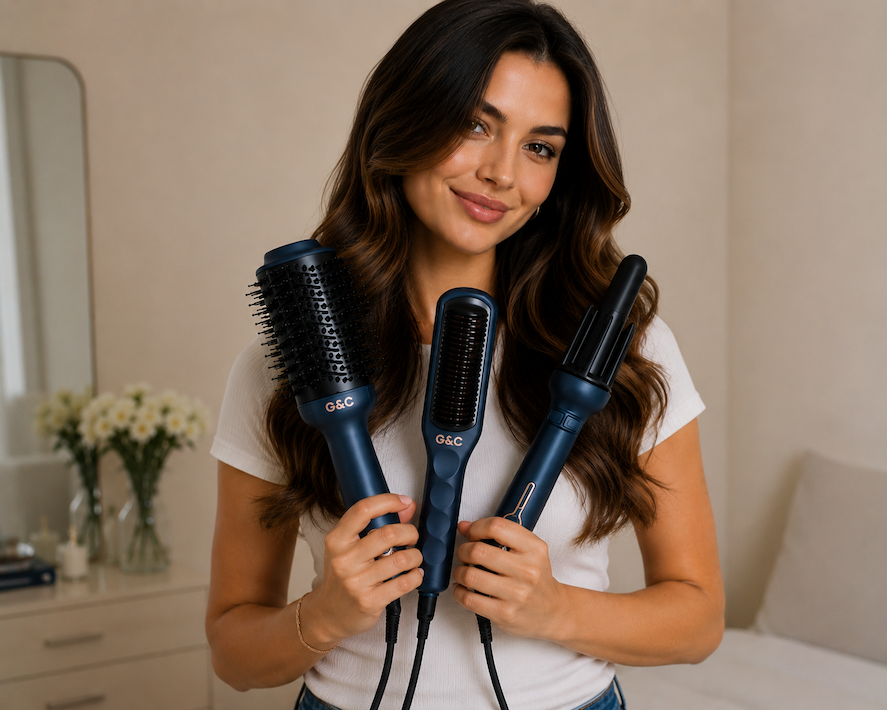
Fine hair is beautiful — but it can be frustrating to style. It loses volume quickly, gets weighed down easily, and can snap under too much heat. The good news? The right tools make a massive difference. This guide covers everything you need to know about choosing the best hair tools for fine hair in Australia, including what features actually matter and which tools are worth your money.
What makes fine hair different to style?
Fine hair refers to the diameter of each individual strand — not how much hair you have. Fine strands are thinner and more delicate, which means they heat up faster, lose moisture faster, and can be damaged more easily by the wrong tools or too-high temperatures.
The most common problems fine-haired Australians run into:
- Volume that collapses within an hour
- Frizz from too much heat or humidity
- Breakage from using tools designed for thick or coarse hair
- Flatness and lack of movement
The fix isn't necessarily expensive tools — it's the right tools used the right way.
What to look for in hair tools for fine hair
Adjustable heat settings
This is the most important feature. Fine hair responds well to lower temperatures — around 150–180°C is usually plenty. Tools that only go up to 230°C and can't be adjusted lower are risky for fine, delicate strands. Always look for tools with multiple heat settings so you can dial down the temperature.
Ionic technology
Ionic tools emit negatively charged ions that break down water molecules in the hair faster. For fine hair, this means less time under heat, less frizz, and smoother results. It's a genuinely useful feature — not just marketing.
Lightweight design
Fine hair tangles easily. A heavy tool that drags through your hair creates more friction, which leads to breakage. Lighter tools are gentler and easier to control.
Brush-style tools over traditional irons
Brush-style tools (like blowout brushes and straightener brushes) are generally kinder to fine hair than traditional flat irons. The bristles distribute heat more evenly and add volume as they style, rather than pressing hair flat.
The best G&C tools for fine hair
Mini Dual Voltage Blowout Brush
The G&C Mini Dual Voltage Blowout Brush is one of the best tools for fine hair because it combines gentle airflow with controlled heat. The smaller barrel size is ideal for shorter or finer hair — it wraps around each section cleanly without pulling. The dual voltage feature (110–240V) also makes it a great travel companion if you're heading interstate or overseas.
Key benefits for fine hair:
- Smaller brush head gives more control over fine sections
- Lower heat settings available to protect delicate strands
- Adds volume at the root without weighing hair down
- Combines drying and styling in one step — less overall heat exposure
Straightener Brush
The G&C Straightener Brush is a gentler alternative to traditional flat irons. Rather than clamping your hair between two plates, the brush glides through sections while smoothing and straightening. For fine hair, this means less tension, less breakage, and a more natural finish with movement rather than a rigid, flat look.
Key benefits for fine hair:
- Brush motion is gentler than flat iron clamping
- Creates smooth, straight results without a stiff, over-straightened look
- Works through fine hair quickly — less heat exposure overall
- Adds smoothness without completely eliminating natural volume
How to style fine hair without damage
Always use a heat protectant
This applies to every hair type, but especially fine hair. A lightweight heat protectant spray (not a heavy serum that weighs hair down) should always go on before any heat tool. It won't make your hair bulletproof, but it significantly reduces thermal stress.
Start with lower heat
Resist the urge to crank the temperature up to get faster results. Fine hair responds quickly — start at 160°C and increase only if needed. Most fine-haired people find they get better results at lower temperatures anyway, with less frizz and more shine.
Work in smaller sections
Fine hair can look fuller when styled in smaller sections. Working through smaller pieces also means each section gets properly styled — you're less likely to go back over the same spot multiple times, which adds unnecessary heat.
Let your hair cool before touching it
Whether you're curling or straightening, let the styled section cool before you run your fingers through it. This is how you lock in the shape — touching warm hair immediately breaks down the style faster.
Common mistakes fine-haired Australians make with heat tools
Using tools designed for thick hair. Higher-wattage tools and professional salon irons designed for thick, resistant hair can be too aggressive for fine strands. You don't need maximum power — you need controlled, even heat.
Skipping the heat protectant. Fine hair has less protective cuticle to absorb heat damage. Skipping protectant is the fastest way to end up with dry, brittle ends.
Styling wet hair. Always make sure hair is at least 80–90% dry before using any heat styling tool. Styling soaking wet fine hair with high heat causes steam damage inside the hair shaft.
Over-styling. Two to three times per week is a healthy frequency for heat styling fine hair. If you're styling every day, focus on protective techniques and styles that last longer so you're not applying heat as often.
Final thoughts
Fine hair doesn't need to be difficult. With the right tools — ones with adjustable heat, ionic technology, and a design that works with fine strands rather than against them — you can get volume, smoothness, and style that actually lasts. The G&C Mini Dual Voltage Blowout Brush and Straightener Brush are both excellent starting points, designed with real hair health in mind.
Browse the full G&C hair tool range and find the right fit for your hair type.


